

ABLE H&C II : ค้นหาหนังสือธรรมะ หน้า 32 / 40
หน้าหนังสือทั้งหมด
111
Understanding the Dhammakāya in Insight Meditation
called the ‘Coarse Dhammakāya Arahant’ or the ‘Subtle Dhammakāya Arahant’ — the latter two being the bodies of enlightenment of the arahant. The Dhammakāyas are all transcendental [lokuttara] in natur
This text delves into the concept of Dhammakāya Arahant, distinguishing between the Coarse and Subtle Dhammakāya. It explains that these bodies are transcendental and consist of pure aggregates that a
114
The Path to Nirvana: Understanding the Dhammakāya
with which his mind had been engrained for countless lifetimes polluting his thoughts, speech and actions — which had led to retribution and leading to his continuing rebirth in the cycle of existence
This text discusses the purification of the mind through the teachings of the Buddha, emphasizing the importance of the Dhammakāya Arahat Body and the attainment of enlightenment. The Pathama Magga re
115
The Journey to Nirvana: Understanding Pathama Magga Sphere
the temptation of looking for rewards in corruption or power. Your memory and wits will be sharpened and your thinking will be fluent and creative allowing you to find constructive solutions to proble
This text discusses the Pathama Magga Sphere, emphasizing the importance of continual mental cultivation towards higher levels of happiness and success. It explains how to 'let go' of this sphere, lea
116
Understanding Nirvana: The Realm Beyond Existence
same happiness to us as if we were really in āyatanā nibbāna — but we are still ‘alive’ in our human body.
2. Nirvana without residual aggregates (Anupādisesa Nirvana [Nibbāna]) is the Nirvana that is
This text delves into the concepts of Āyatanā Nibbāna and Anupādisesa Nibbāna, explaining that Nirvana exists beyond the physical realm and is not bound by worldly elements. It describes Nirvana as a
117
The Noble Truth of the Cessation of Suffering
The Noble Truth of the Cessation of Suffering: A Conclusion
The Lord Buddha taught that the cessation of suffering can
be effected by extinguishing all craving through the prac-
tice of the Noble Eigh
The conclusion on the cessation of suffering according to the Buddha highlights the need to extinguish craving through the Noble Eightfold Path. Once craving is eliminated, suffering cannot return. Ou
118
Understanding the Mind and Success in Buddhist Practice
and the four different functions of the mind are scattered in their separate directions like a group of people unable to work as a team — they cannot pool their abilities efficiently.
By 'all succes
This text discusses the four functions of the mind and their impact on achieving success in Buddhist practice, as emphasized by Luang Phaw Wat Paknam. He speaks on the importance of reaching a state o
121
The Noble Eightfold Path: Ethical Conduct and Mindfulness
Stealing [adinnādāna]: Taking that which is not given;
Committing adultery [kāmesumicchācarā]: abstaining from sexual relations outside marriage.
5. Right Livelihood
The Lord Buddha taught his monks
This text discusses key principles of the Noble Eightfold Path, focusing on ethical conduct such as Right Speech, Right Action which includes abstaining from stealing and committing adultery, and Righ
122
The Journey to Inner Bodies and Enlightenment
(also called the 'astral body' or 'dream body') all the way up to the various bodies of enlightenment.
The meditator can see and consider bodies within the body by setting their attention to the centr
This text describes the meditative journey towards discovering inner bodies, known as the astral or dream body, and various spheres of awareness that lead to enlightenment. It details how focusing att
127
Understanding the Mind and Its Layers
are mindful that ‘the mind is distracted’. If the mind is con-
centrated, you are mindful that ‘the mind is concentrated’.
If the mind is liberated, you are mindful that ‘the mind is
liberated’. If
The text delves into the nature of the mind, describing its four concentric layers: perception, sensory registration, central processing, and cognition. It explains how mindfulness operates at each le
128
The Relationship Between Processing, Cognition, and Mindfulness
processing and cognition are nested together inseparably and as a unit take the form of the subtle physical body. If the four faculties are separated, the subtle physical body will die immediately — a
Processing and cognition are intimately linked, forming the subtle physical body. If four faculties are disconnected, the subtle body ceases to exist, impacting physical survival. Mindfulness includes
130
Understanding Mindfulness in the Mind
mind in the mind, it means mindfulness only of the sphere of central processing — and not the spheres of the mind involved with perception, sensory registration or cognition. It is no use having mindf
The text discusses mindfulness focusing on the central processing of the mind, distinguishing it from perception and cognition. It describes the clear nature of the pure mind that becomes tainted by d
137
Understanding the Bodies of Enlightenment
ment, the Arahatta Body of Enlightenment [Dhammakāya Arahat] and the Subtle Arahatta Body of Enlightenment.
Thus there are ten types of Bodies of Enlightenment.
The Benefits of Attaining the Inner Bod
This content discusses the ten types of Bodies of Enlightenment, including the Arahatta Body and Subtle Arahatta Body, emphasizing the benefits of attaining inner bodies for personal growth. Meditator
139
Understanding the Body of Enlightenment in Buddhism
hatred [dosa] and delusion [moha].
Having attained the Sakidägämi Body of Enlightenment,
the meditator uses this Body of Enlightenment to examine
the Four Noble Truths in the Brahmä Body both forwards
บทความนี้สำรวจระดับต่างๆ ของการตรัสรู้ในพุทธศาสนา โดยเน้นถึงการใช้ร่างกายของการตรัสรู้ เช่น Sakidägämi, Anägämi และ Arahant ซึ่งผู้ปฏิบัติธรรมจะสามารถปล่อยวางข้อผูกพันต่างๆ เพื่อเข้าถึงความรู้สูงและกา
142
The Path to Enlightenment: Understanding Dhammakāya
the knowledge arising from cognition may be erroneous.
The knowledge arising from 'knowing', by contrast, de-
pends on the Dhammakāya — it is knowledge based on
true wisdom such as the Four Noble Trut
This text discusses the distinction between knowledge gained through cognition and that which arises from true wisdom based on the Dhammakāya. It details the bodhisatva's rigorous meditation practice
143
Understanding the Dhamma Body and the Noble Path
Dhamma Body — not with the human eye or the naked eye.
All the knowledge that brought him to Buddhahood came
by the ‘knowing’ of the Dhamma Body, not by rationale or
reasoning with the logical (hum
The Dhamma Body can only be perceived beyond the human eye, allowing the Buddha to grasp deep truths about existence. His compassion drove him to teach the Noble Path for the liberation of others, adv
145
Understanding the Eightfold Path: Right Mindfulness and Right Concentration
fort: doing of evils not yet done, maintainance of evils already done, not doing virtues not yet done and abandoning virtues already mastered.
As for Right Mindfulness, he would immediately and defini
This excerpt explores the significance of the Eightfold Path, specifically focusing on Right Mindfulness and Right Concentration. It emphasizes understanding the aggregates of existence as they relate
146
Understanding the Eightfold Path
which proposes various moods and situations for its approval.
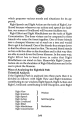
Right Speech and Right Action are the tools of Right Livelihood because whenever our actions and speech are faultless, our means of liveli
This excerpt delves into the components of the Eightfold Path, highlighting the significance of Right Speech and Right Action as essential tools of Right Livelihood. It compares virtues to friends sup
152
The Significance of the Triple Gem and Six Recollections
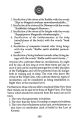
1. Recollection of the virtues of the Buddha with the words "Itipi so bhagavā arahant sammāsambuddho..."
2. Recollection of the virtues of the Dhamma with the words "Suākkhāto bhagavā dhammo..."
3. R
This text emphasizes the importance of recollecting the virtues of the Buddha, Dhamma, and Sangha, along with mindfulness of the body and the cultivation of compassion and loving-kindness towards all
159
The Festival of Fools: A Tale of Wisdom
Once there was a festival which had been organized by fools. It was called the ‘Festival of Fools’ and lasted for seven full days. The fools of the town would sit in a circle and get drunk before goin
Once there was a Festival of Fools characterized by reckless behavior of drunken townsfolk. A group of Buddha's followers, having achieved stream-entry, chose to meditate instead of participating. Upo
165
Understanding Right Livelihood and Wrong Trade
hardly be able to find anyone to praise them;
4. They will spend forthcoming lifetimes in hell.
Having heard the Buddha’s teaching, Khema attained
stream-entry, never committing adultery again
This ex
In Buddhist teachings, Right Livelihood refers to earning a living that upholds ethical values and avoids harmful practices. It specifically highlights five types of Wrong Trade which are prohibited: